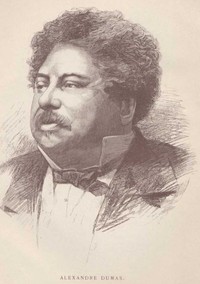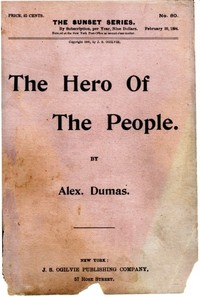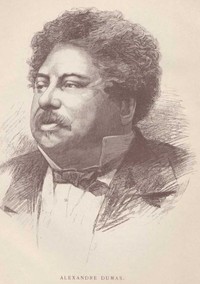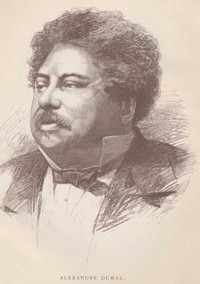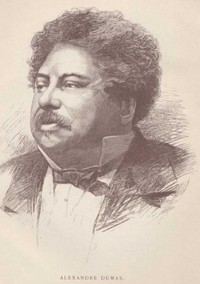
Cover of Mary Stuart

Mary Stuart

  • Free to read
  • 5 hours to read
  • 10 chapters
  • Reading level: 8th & 9th grade

"Mary Stuart" by Alexandre Dumas is a historical novel written in the late 19th century. The book explores the tumultuous life of Mary Stuart, the Queen of Scots, as she navigates the treacherous political intrigues and personal tragedies that ultimately shape her fate and legacy. Dumas presents a richly detailed portrayal of Mary as a tragic heroine, highlighting her struggles with love, power, and betrayal against the backdrop of 16th-century Scotland. At the start of the novel, Dumas sets the stage for Mary's story by delving into the historical context of her lineage and the misfortunes associated with the Stuart name. The narrative begins with Mary's emotional farewell to France as she returns to Scotland, burdened by grief from the recent loss of her loved ones. During her journey, an ominous event occurs—a shipwreck that foreshadows the tragedy that will follow in her life. As Mary arrives in an impoverished Scotland, she clings to her beauty and royal identity while facing immediate challenges, including religious tensions and the complexities of her relationships with influential nobles. Dumas effectively captures her internal conflict and the external pressures she confronts, laying the groundwork for her dramatic rise and fall as a queen.

Read free now No app, no sign-up. Your place is saved automatically. Or download for your e-reader ↓
  • Crime

Read the opening

Chapter I

Some royal names are predestined to misfortune: in France, there is the name "Henry". Henry I was poisoned, Henry II was killed in a tournament, Henry III and Henry IV were assassinated. As to Henry V, for whom the past is so fatal already, God alone knows what the future has in store for him.

In Scotland, the unlucky name is "Stuart". Robert I, founder of the race, died at twenty-eight of a lingering illness. Robert II, the most fortunate of the family, was obliged to pass a part of his life, not merely in retirement, but also in the dark, on account of inflammation of the eyes, which made them blood-red. Robert III succumbed to grief, the death of one son and the captivity of other. James I was stabbed by Graham in the abbey of the Black Monks of Perth. James II was killed at the siege of Roxburgh, by a splinter from a burst cannon. James III was assassinated by an unknown hand in a mill, where he had taken refuge during the battle of Sauchie. James IV, wounded by two arrows and a blow from a halberd, fell amidst his nobles on the battlefield of Flodden. James V died of grief at the loss of his two sons, and of remorse for the execution of Hamilton. James VI, destined to unite on his head the two crowns of Scotland and England, son of a father who had been assassinated, led a melancholy and timorous existence, between the scaffold of his mother, Mary Stuart, and that of his son, Charles I. Charles II spent a portion of his life in exile. James II died in it. The Chevalier Saint-George, after having been proclaimed King of Scotland as James VIII, and of England and Ireland as James III, was forced to flee, without having been able to give his arms even the lustre of a defeat. His son, Charles Edward, after the skirmish at Derby and the battle of Culloden, hunted from mountain to mountain, pursued from rock to rock, swimming from shore to shore, picked up half naked by a French vessel, betook himself to Florence to die there, without the European courts having ever consented to recognise him as a sovereign. Finally, his brother, Henry Benedict, the last heir of the Stuarts, having lived on a pension of three thousand pounds sterling, granted him by George III, died completely forgotten, bequeathing to the House of Hanover all the crown jewels which James II had carried off when he passed over to the Continent in 1688—a tardy but complete recognition of the legitimacy of the family which had succeeded his.

Keep reading Mary Stuart →

Contents

  1. Chapter I
  2. Chapter II
  3. Chapter III
  4. Chapter IV
  5. Chapter V
  6. Chapter VI
  7. Chapter VII
  8. Chapter VIII
  9. Chapter IX
  10. Chapter X

Download for your e-reader

Files are provided by Project Gutenberg. On a Kindle, the simplest route is to send the EPUB with Amazon’s Send to Kindle. Downloaded copies don’t sync with your place on Classic Book Reader.

About this edition

This free edition of Mary Stuart by Alexandre Dumas comes from Project Gutenberg eBook #2744, released 2004-09-22. It is in the public domain in the United States, so you can read it here in full at no cost, on any phone, tablet or computer. Genre: Historical Novels, French Literature.

Summary provided by Project Gutenberg (automatically generated).

More by Alexandre Dumas