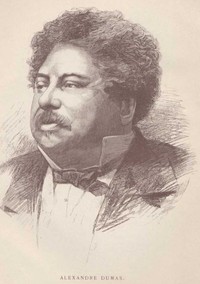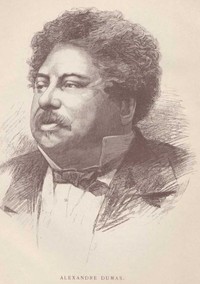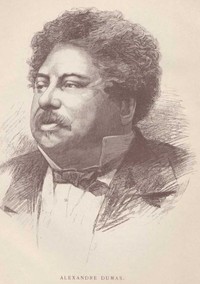
Cover of The Borgias

The Borgias

  • Free to read
  • 5 hours to read
  • 18 chapters
  • Reading level: College-level

"The Borgias" by Alexandre Dumas is a historical account written in the early 20th century. The work explores the notorious Borgia family during the late 15th and early 16th centuries, a period marked by corruption, power struggles, and intrigue in Italy. Central figures include Lorenzo de' Medici, the influential statesman, and Roderigo Borgia, who later becomes Pope Alexander VI, as well as his children, Lucrezia and Cesare Borgia, each embroiled in scandal and politics. At the start of the book, Dumas presents a gripping prologue detailing the deathbed confession of Lorenzo de' Medici. Surrounded by close associates, he wrestles with his moral failings and the impending arrival of the austere monk Savonarola, who is poised to offer absolution with grave conditions regarding the legitimacy of his rule and the state of Florence. The opening chapters then shift focus to the political climate of Rome as the papacy faces a power vacuum following the death of Pope Innocent VIII, highlighting the ensuing papal conclave and revealing the plans of Roderigo Borgia to secure the papal throne. The narrative sets the stage for the Borgia family's rise to power amid the chaos of political machinations and familial ambitions.

Read free now No app, no sign-up. Your place is saved automatically. Or download for your e-reader ↓
  • Crime

Read the opening

Prologue

On the 8th of April, 1492, in a bedroom of the Carneggi Palace, about three miles from Florence, were three men grouped about a bed whereon a fourth lay dying.

The first of these three men, sitting at the foot of the bed, and half hidden, that he might conceal his tears, in the gold-brocaded curtains, was Ermolao Barbaro, author of the treatise 'On Celibacy', and of 'Studies in Pliny': the year before, when he was at Rome in the capacity of ambassador of the Florentine Republic, he had been appointed Patriarch of Aquileia by Innocent VIII.

The second, who was kneeling and holding one hand of the dying man between his own, was Angelo Poliziano, the Catullus of the fifteenth century, a classic of the lighter sort, who in his Latin verses might have been mistaken for a poet of the Augustan age.

The third, who was standing up and leaning against one of the twisted columns of the bed-head, following with profound sadness the progress of the malady which he read in the face of his departing friend, was the famous Pico della Mirandola, who at the age of twenty could speak twenty-two languages, and who had offered to reply in each of these languages to any seven hundred questions that might be put to him by the twenty most learned men in the whole world, if they could be assembled at Florence.

Keep reading The Borgias →

Contents

  1. Prologue
  2. Chapter I
  3. Chapter II
  4. Chapter III
  5. Chapter IV
  6. Chapter V
  7. Chapter VI
  8. Chapter VII
  9. Chapter VIII
  10. Chapter IX
  11. Chapter X
  12. Chapter XI
  13. Chapter XII
  14. Chapter XIII
  15. Chapter XIV
  16. Chapter XV
  17. Chapter XVI
  18. Epilogue

Download for your e-reader

Files are provided by Project Gutenberg. On a Kindle, the simplest route is to send the EPUB with Amazon’s Send to Kindle. Downloaded copies don’t sync with your place on Classic Book Reader.

About this edition

This free edition of The Borgias by Alexandre Dumas comes from Project Gutenberg eBook #2741, released 2004-09-22. It is in the public domain in the United States, so you can read it here in full at no cost, on any phone, tablet or computer. Genre: History - European, History - Medieval/Middle Ages, History - Religious, History - Royalty.

Summary provided by Project Gutenberg (automatically generated).

More by Alexandre Dumas