The call of Cthulhu
by H. P. Lovecraft (1890–1937)
- Free to read
- 50 min read
- Reading level: 8th & 9th grade
"The Call of Cthulhu" by H. P. Lovecraft is a cosmic horror short story written in 1926 and published in 1928. After inheriting his grand-uncle's mysterious notes, Francis Wayland Thurston pieces together a terrifying puzzle involving disturbing dreams, ancient cults, and a monstrous entity called Cthulhu. His investigation leads him across continents, from New Orleans rituals to a nightmare city on an uncharted island, where something immense and ancient awaits. As Thurston uncovers the truth, he realizes he may become the next target.
- Horror tales
- Cthulhu (Fictitious character)
Read the opening
The CALL of CTHULHU
By H.P. LOVECRAFT
[Transcriber's Note: This etext was produced from
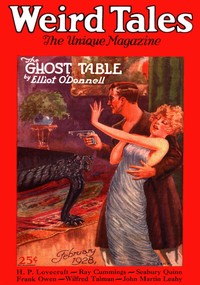
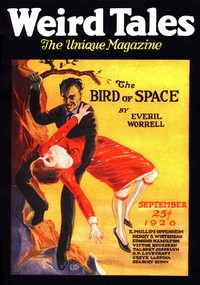
Weird Tales, February 1928.
Extensive research did not uncover any evidence that
the U.S. copyright on this publication was renewed.]
"Of such great powers or beings there may be conceivably a
survival ... a survival of a hugely remote period when ...
consciousness was manifested, perhaps, in shapes and forms long
since withdrawn before the tide of advancing humanity ... forms
of which poetry and legend alone have caught a flying memory
and called them gods, monsters, mythical beings of all sorts
and kinds...."
[Footnote 1: Found among the papers of the late Francis Wayland Thurston, of Boston.]
Keep reading The call of Cthulhu →
Download for your e-reader
Files are provided by Project Gutenberg. On a Kindle, the simplest route is to send the EPUB with Amazon’s Send to Kindle. Downloaded copies don’t sync with your place on Classic Book Reader.
About this edition
This free edition of The call of Cthulhu by H. P. Lovecraft comes from Project Gutenberg eBook #68283, released 2022-06-10. It is in the public domain in the United States, so you can read it here in full at no cost, on any phone, tablet or computer. Genre: Short Stories, Science-Fiction & Fantasy, Crime, Thrillers and Mystery, American Literature.
Summary provided by Project Gutenberg (automatically generated).