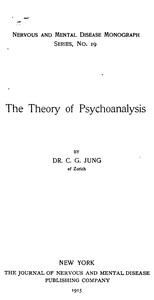
The Theory of Psychoanalysis
by C. G. Jung (1875–1961)
- Free to read
- 3 hours to read
- 12 chapters
- Reading level: College-level
"The Theory of Psychoanalysis" by C. G. Jung is a scientific publication written in the early 20th century. This work dives into the foundations and transformations of psychoanalytic theory, primarily reflecting on the contributions of Sigmund Freud and offering Jung's own critiques and insights on the subject. The book aims to reconcile practical experiences in psychoanalysis with established theories, focusing on topics such as infantile sexuality, repression, and the role of trauma in neuroses. The opening of the text introduces Jung's position within the psychoanalytic community and the context of his lectures, which were delivered in 1912. Jung expresses a desire to address the misunderstanding and misrepresentation of psychoanalytic theories, particularly Freud's ideas, and outlines the evolution of thought surrounding the role of trauma and sexuality in psychological disorders. He emphasizes that psychoanalysis is an evolving theory that requires adherence to empirical observations drawn from clinical experiences rather than rigid acceptance of earlier formulations. Jung's reflective approach suggests an aim to cultivate a deeper understanding of psychological phenomena that takes into account both personal observation and ongoing discourse within the field.
- Psychology, Pathological
- Sex
- Psychoanalysis
- Neuroses
Read the opening
Chapter I: Consideration of Early Hypotheses
It is not an easy task to speak about psychoanalysis in these days. I am not thinking, when I say this, of the fact that psychoanalysis in general—it is my earnest conviction—is among the most difficult scientific problems of the day. But even when we put this cardinal fact aside, we find many serious difficulties which interfere with the clear interpretation of the matter. I am not capable of giving you a complete doctrine elaborated both from the theoretical and the empirical standpoint. Psychoanalysis has not yet reached such a point of development, although a great amount of labor has been expended upon it. Neither can I give you a description of its growth ab ovo, for you already have in your country, with its great regard for all the progress of civilization, a considerable literature on the subject. This literature has already spread a general knowledge of psychoanalysis among those who have a scientific interest in it.
Keep reading The Theory of Psychoanalysis →
Download for your e-reader
Files are provided by Project Gutenberg. On a Kindle, the simplest route is to send the EPUB with Amazon’s Send to Kindle. Downloaded copies don’t sync with your place on Classic Book Reader.
About this edition
This free edition of The Theory of Psychoanalysis by C. G. Jung comes from Project Gutenberg eBook #66041, released 2021-08-11. It is in the public domain in the United States, so you can read it here in full at no cost, on any phone, tablet or computer. Genre: Psychiatry/Psychology.
Summary provided by Project Gutenberg (automatically generated).