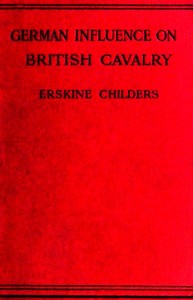
Cover of German Influence on British Cavalry

German Influence on British Cavalry

  • Free to read
  • 3 hours to read
  • 12 chapters
  • Reading level: 10th to 12th grade

"German Influence on British Cavalry" by Erskine Childers is a historical account written in the early 20th century. In this work, the author critically examines the impact of German military theories and practices on British cavalry tactics, especially in light of modern warfare developments. The book seeks to contrast the outdated methods still endorsed by some British military leaders with the realities of contemporary combat, emphasizing the need for innovation based on actual war experience rather than rigid adherence to past traditions. The opening of the text introduces the author's motivations, notably responding to contemporary military literature, including General von Bernhardi's works on cavalry theory. Childers articulates his argument against the continued reliance on ancient cavalry weapons like the lance and sword, advocating instead for a modern approach centered around the rifle. He discusses the absence of modern cavalry tactics in British military thinking and aims to awaken critical thought among British officers to reject foreign models and develop a uniquely British cavalry strategy that aligns with current combat conditions. The emphasis is placed on learning from recent conflicts, such as the Boer War, to fundamentally revise cavalry effectiveness and doctrine.

Read free now No app, no sign-up. Your place is saved automatically. Or download for your e-reader ↓
  • Cavalry
  • Cavalry drill and tactics
  • Great Britain. Army · Cavalry · History
Read the opening

Chapter I

INTRODUCTORY

I. THE GERMAN MODEL.

IMPARTIAL observers of the recent controversy upon the merits of the lance and sword as weapons for Cavalry must have been struck by one singular circumstance—namely, that there exists in our language no standard modern work upon the tactics and training of Cavalry in modern war, written by a Cavalryman, accepted by Cavalrymen, and embodying and illustrating the lessons of the two great modern wars waged since the invention of the long-range, smokeless magazine rifle. Without such a work, controversy is seriously hampered. The need for it is beyond dispute.

Whatever the extent of the revolution brought about by the magazine rifle, a revolution, by universal admission, there is. Since 1901 a serious firearm has been substituted for the old carbine formerly carried by the Cavalry, and the Cavalry Manual has been rewritten, with increased stress on the importance of fire. It is also the fact that, from whatever causes, the lance and sword have proved, both in South Africa and Manchuria, almost innocuous weapons. These facts demand, to say the least, serious recognition from those who still hold that the lance and sword are the most important weapons of Cavalry. Angry letters to the daily press, desultory and superficial articles in the weekly and monthly press, are not enough. What is wanted is some comprehensive and authoritative exposition of what Cavalry functions are in modern war, how they have been modified by the firearm, and why, with chapter and verse, not by way of vague allegation, the only great wars in which that firearm has been tested are to be regarded as "abnormal" and uninstructive.

Keep reading German Influence on British Cavalry →

Contents

  1. Preface
  2. Chapter I
  3. Chapter II
  4. Chapter III
  5. Chapter IV
  6. Chapter V
  7. Chapter VI
  8. Chapter VII
  9. Chapter VIII
  10. Chapter IX
  11. Chapter X
  12. Volume III., 1867-1900

Download for your e-reader

Files are provided by Project Gutenberg. On a Kindle, the simplest route is to send the EPUB with Amazon’s Send to Kindle. Downloaded copies don’t sync with your place on Classic Book Reader.

About this edition

This free edition of German Influence on British Cavalry by Erskine Childers comes from Project Gutenberg eBook #56924, released 2018-04-05. It is in the public domain in the United States, so you can read it here in full at no cost, on any phone, tablet or computer. Genre: History - British, History - European, History - Modern (1750+), History - Warfare.

Summary provided by Project Gutenberg (automatically generated).

More by Erskine Childers