The Battle with the Slum
by Jacob A. Riis (1849–1914)
- Free to read
- 6 hours to read
- 18 chapters
- Reading level: 7th grade
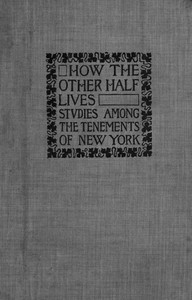
"The Battle with the Slum" by Jacob A. Riis is a social commentary written in the early 20th century. The book serves as a continuation of Riis's previous work, "How the Other Half Lives," and focuses on the urgent need for reform in the slums of urban America. Riis highlights the struggles of impoverished communities, the systemic issues that keep them trapped in cycles of poverty, and the communal efforts required to bring about change. The opening of the narrative introduces key themes such as the indelible link between slum conditions and broader societal issues. Riis paints a vivid picture of the slums as not just a physical manifestation of urban decay, but as a result of systemic neglect, greed, and moral failure. He argues for the necessity of civic engagement and justice to combat the challenges faced by the residents of the slums, emphasizing that without intervention, both the communities and the city at large would face dire consequences. The text sets the groundwork for a deeper exploration of specific battles against the injustices faced in these neighborhoods, showcasing the intertwining of social welfare and political action.
- Poor
- Poor · New York (State) · New York
- Tenement houses · New York (State) · New York
Read the opening
Chapter I
BATTLING AGAINST HEAVY ODDS
The slum I speak of is our own. We made it, but let us be glad we have no patent on the manufacture. It is not, as one wrote with soul quite too patriotic to let the Old World into competition on any terms, "the offspring of the American factory system." Not that, thank goodness! It comes much nearer to being a slice of original sin which makes right of might whenever the chance offers. When to-day we clamor for air and light and water as man's natural rights because necessary to his being, we are merely following in the track Hippocrates trod twenty-five centuries ago. How like the slums of Rome were to those of New York any one may learn from Juvenal's Satires and Gibbon's description of Rome under Augustus. "I must live in a place where there are no fires, no nightly alarms," cries the poet, apostle of commuters. "Already is Ucalegon shouting for water, already is he removing his chattels; the third story in the house you live in is already in a blaze. You know nothing about it. For if the alarm begin from the bottom of the stairs, he will be the last to be burned whom a single tile protects from the rain where the tame pigeons lay their eggs." (Clearly they had no air-shafts in the Roman tenements!) "Codrus had a bed too small for his Procula; six little jugs, the ornament of his sideboard, and a little can, besides, beneath it.... What a height it is from the lofty roofs from which a potsherd tumbles on your brains. How often cracked and chipped earthenware falls from the windows.... Pray and bear about with you the miserable wish that they may be contented with throwing down only what the broad basins have held.... If you can tear yourself away from the games in the circus, you can buy a capital house at Sora, or Fabrateria, or Frasino, for the price at which you are now hiring your dark hole for one year. There you will have your little garden ... live there enamoured of the pitchfork.... It is something to be able in any spot to have made oneself proprietor even of a single lizard.... None but the wealthy can sleep in Rome."[3]
Keep reading The Battle with the Slum →
Download for your e-reader
Files are provided by Project Gutenberg. On a Kindle, the simplest route is to send the EPUB with Amazon’s Send to Kindle. Downloaded copies don’t sync with your place on Classic Book Reader.
About this edition
This free edition of The Battle with the Slum by Jacob A. Riis comes from Project Gutenberg eBook #28228, released 2009-03-01. It is in the public domain in the United States, so you can read it here in full at no cost, on any phone, tablet or computer. Genre: History - American, Sociology, Politics.
Summary provided by Project Gutenberg (automatically generated).