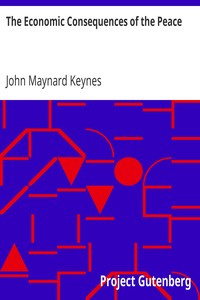
The Economic Consequences of the Peace
by John Maynard Keynes (1883–1946)
- Free to read
- 5 hours to read
- 8 chapters
- Reading level: 10th to 12th grade
"The Economic Consequences of the Peace" by John Maynard Keynes is a critical economic and political analysis written in the early 20th century. The work focuses on the implications of the Treaty of Versailles and the overall peace settlement following World War I. It examines the economic landscape of Europe post-war and discusses the potential negative outcomes of the treaty on European economies, particularly that of Germany, asserting that the terms may lead to widespread suffering and instability. The opening of the text introduces Keynes's perspective as someone who was closely involved with the Paris Peace Conference, emphasizing the precarious economic situation present in post-war Europe. He notes humanity's tendency to become accustomed to an unstable economic environment and critiques the Allied powers, particularly France and Britain, for potentially exacerbating an already volatile situation through harsh peace terms. Specifically, he emphasizes that the economic decisions made during the peace negotiations could lead to further ruin rather than restoration, igniting a sense of urgency regarding the future stability of Europe.
- World War, 1914-1918 · Economic aspects
- Treaty of Versailles (1919 June 28)
- Economic history · 1918-1945
Read the opening
Chapter I
INTRODUCTORY
The power to become habituated to his surroundings is a marked characteristic of mankind. Very few of us realize with conviction the intensely unusual, unstable, complicated, unreliable, temporary nature of the economic organization by which Western Europe has lived for the last half century. We assume some of the most peculiar and temporary of our late advantages as natural, permanent, and to be depended on, and we lay our plans accordingly. On this sandy and false foundation we scheme for social improvement and dress our political platforms, pursue our animosities and particular ambitions, and feel ourselves with enough margin in hand to foster, not assuage, civil conflict in the European family. Moved by insane delusion and reckless self-regard, the German people overturned the foundations on which we all lived and built. But the spokesmen of the French and British peoples have run the risk of completing the ruin, which Germany began, by a Peace which, if it is carried into effect, must impair yet further, when it might have restored, the delicate, complicated organization, already shaken and broken by war, through which alone the European peoples can employ themselves and live.
Keep reading The Economic Consequences of the Peace →
Download for your e-reader
Files are provided by Project Gutenberg. On a Kindle, the simplest route is to send the EPUB with Amazon’s Send to Kindle. Downloaded copies don’t sync with your place on Classic Book Reader.
About this edition
This free edition of The Economic Consequences of the Peace by John Maynard Keynes comes from Project Gutenberg eBook #15776, released 2005-05-06. It is in the public domain in the United States, so you can read it here in full at no cost, on any phone, tablet or computer. Genre: History - Modern (1750+), Politics, Economics.
Summary provided by Project Gutenberg (automatically generated).
More by John Maynard Keynes