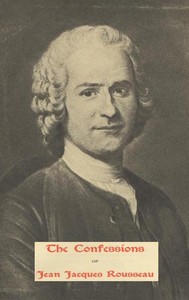
Cover of A Discourse Upon the Origin and the Foundation of the Inequality Among Mankind

A Discourse Upon the Origin and the Foundation of the Inequality Among Mankind

  • Free to read
  • 2 hours to read
  • Reading level: College-level

"A Discourse Upon the Origin and the Foundation of the Inequality Among Mankind" by Jean-Jacques Rousseau is a philosophical treatise written in 1754 and published in 1755. Rousseau challenges conventional views by examining how humans evolved from a natural state of independence into civil society. He argues that moral inequality stems not from nature but from social conventions, particularly private property. Exploring concepts like human perfectibility and self-love, Rousseau critiques how civilization transformed peaceful, self-sufficient beings into comparison-driven individuals dependent on others' opinions.

Read free now No app, no sign-up. Your place is saved automatically. Or download for your e-reader ↓
  • Political science
  • Natural law
  • Equality

Read the opening

A Discourse Upon The Origin And The Foundation Of The Inequality Among Mankind

By J. J. Rousseau

INTRODUCTORY NOTE

Jean Jacques Rousseau was born at Geneva, June 28, 1712, the son of a watchmaker of French origin. His education was irregular, and though he tried many professions—including engraving, music, and teaching—he found it difficult to support himself in any of them. The discovery of his talent as a writer came with the winning of a prize offered by the Academy of Dijon for a discourse on the question, "Whether the progress of the sciences and of letters has tended to corrupt or to elevate morals." He argued so brilliantly that the tendency of civilization was degrading that he became at once famous. The discourse here printed on the causes of inequality among men was written in a similar competition.

He now concentrated his powers upon literature, producing two novels, "La Nouvelle Heloise," the forerunner and parent of endless sentimental and picturesque fictions; and "Emile, ou l'Education," a work which has had enormous influence on the theory and practise of pedagogy down to our own time and in which the Savoyard Vicar appears, who is used as the mouthpiece for Rousseau's own religious ideas. "Le Contrat Social" (1762) elaborated the doctrine of the discourse on inequality. Both historically and philosophically it is unsound; but it was the chief literary source of the enthusiasm for liberty, fraternity, and equality, which inspired the leaders of the French Revolution, and its effects passed far beyond France.

Keep reading A Discourse Upon the Origin and the Foundation of the Inequality Among Mankind →

Download for your e-reader

Files are provided by Project Gutenberg. On a Kindle, the simplest route is to send the EPUB with Amazon’s Send to Kindle. Downloaded copies don’t sync with your place on Classic Book Reader.

About this edition

This free edition of A Discourse Upon the Origin and the Foundation of the Inequality Among Mankind by Jean-Jacques Rousseau comes from Project Gutenberg eBook #11136, released 2004-02-01. It is in the public domain in the United States, so you can read it here in full at no cost, on any phone, tablet or computer. Genre: History - Early Modern (c. 1450-1750), Philosophy & Ethics.

Summary provided by Project Gutenberg (automatically generated).

More by Jean-Jacques Rousseau